



When securing heavy equipment or a structural column to a concrete foundation, the choice of fastener is a critical engineering decision. On the surface, many bolts designed for concrete and masonry look similar, leading to the common—and often confusing—question: what is the real difference between anchor bolts and expansion bolts? While the terms are sometimes used interchangeably, they represent distinct categories of fasteners with different mechanisms, applications, and load-bearing capabilities. Choosing the wrong one can compromise the integrity of the entire structure. This guide will break down the fundamental differences, explain how each type of anchor works, and provide the clarity needed to select the right fastener for your specific application, ensuring a secure and lasting installation.
What is the Core Mechanism of an Expansion Bolt?
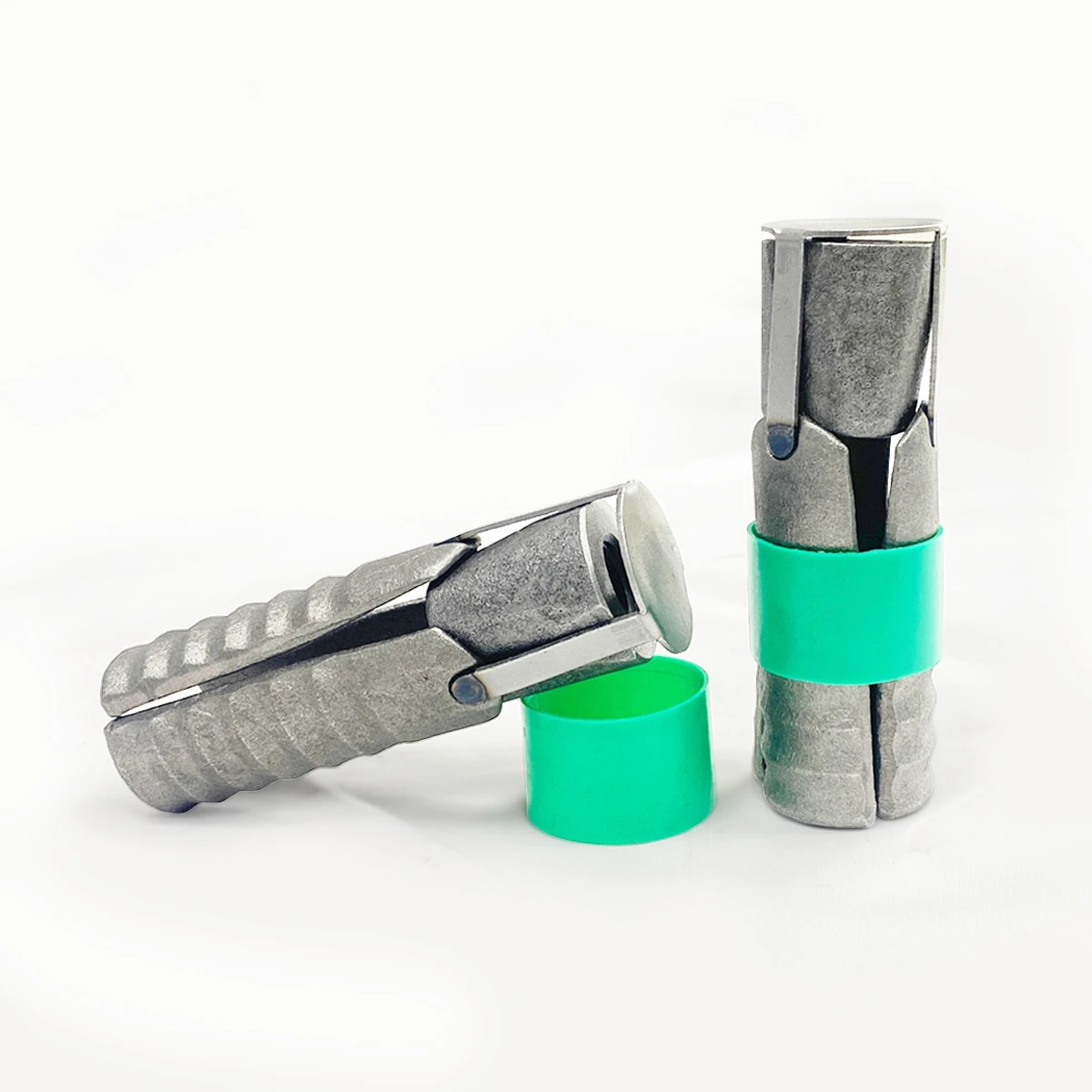
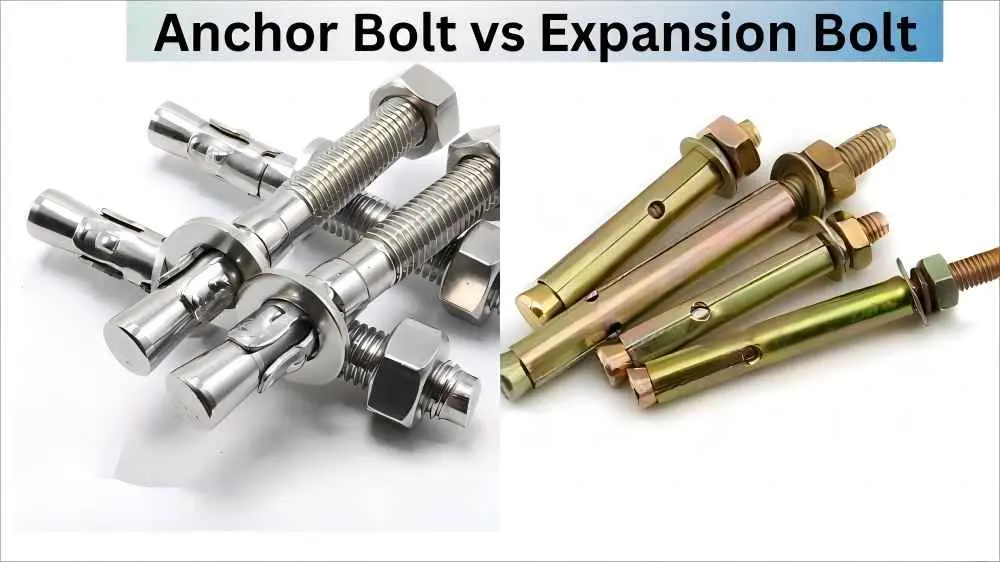
An expansion bolt is a type of anchor that secures itself in concrete or masonry through a clever mechanical process. Its holding power comes from creating a strong frictional force against the inside of the drilled hole. A typical expansion bolt, such as a wedge anchor or sleeve anchor, consists of a threaded body, a nut and washer, and a crucial expansion element—a sleeve, shell, or clip.
The installation process is key to its function. After a hole is drilled into the concrete, the expansion anchor is inserted. As you tighten the nut, the threaded part of the bolt is pulled upwards. This action forces the expansion sleeve or clip down and outwards, causing it to expand and press forcefully against the surrounding base material. This outward pressure creates a powerful frictional grip that holds the anchor firmly in place. It’s this expansion mechanism that defines this entire category of post-installed anchors, which are installed into existing, hardened concrete.
So, How Are Anchor Bolts Fundamentally Different?
The term anchor bolts is actually a very broad category that includes expansion anchors. However, in professional construction and engineering, when people draw a distinction, they are usually comparing post-installed expansion anchors to cast-in-place anchor bolts. These are two very different types of anchor systems.
Cast-in-place anchor bolts are embedded into the concrete foundation as it is being poured. They become an integral, monolithic part of the structure itself. A common example is an L-shaped or J-shaped bolt where the bent end provides a massive mechanical lock once the concrete cures around it. Unlike an expansion bolt, which relies on friction, a cast-in-place anchor relies on the sheer strength and shape of the embedded steel and its bond with the concrete. This makes them exceptionally strong and suitable for the most demanding structural applications, such as securing a steel column or the foundation of heavy industrial machinery.
What Are the Key Differences in Their Installation?
The installation process is one of the most significant differences between anchor bolts and expansion anchors. The installation requirements for each are completely distinct.
Expansion Anchor Installation:
- Drill: A precise hole is drilled into the hardened concrete or masonry. The diameter and depth are critical for the anchor to function correctly.
- Clean: The hole is thoroughly cleaned of all dust and debris, which is essential for consistent holding strength.
- Insert: The expansion anchor is inserted into the hole.
- Tighten: A wrench is used to tighten the nut, which activates the expansion mechanism and secures the anchor.
Cast-in-Place Anchor Bolt Installation:
- Position: The anchor bolts are held in their exact positions by a template before the concrete is poured.
- Pour: Concrete is poured into the formwork, completely surrounding the embedded end of the bolt.
- Cure: The concrete must cure and harden, creating a permanent bond with the anchor. Only after this process can any load be applied.
This highlights the primary flexibility advantage of the expansion bolt: it can be installed anywhere in an existing concrete structure, while a cast-in-place anchor must be planned at the design stage.
When Should You Choose an Expansion Bolt?
An expansion bolt is the go-to choice for a wide range of post-installed fastening applications. They are ideal for situations where you need to attach something to an existing concrete or masonry surface. This includes both light-duty and heavy-duty tasks. You would select an expansion anchor for securing industrial equipment, storage racks, support brackets, handrails, and building facades.
Their main advantage is their flexibility. You can decide on the exact location of the anchor on-site, making them perfect for retrofitting and renovation projects. Different types of expansion anchors, like wedge anchors and sleeve anchors, offer varying levels of holding strength, allowing you to choose the right anchor for the specific load requirement of your application. For a deeper look at a powerful option, consider the Expansion Shell Anchor Bolt. They are a reliable and commonly used solution in countless construction and industrial projects.
What Applications Demand a True Structural Anchor Bolt?
True structural anchor bolts—the cast-in-place type—are reserved for the most critical, high-load connections. These are the fasteners that form the skeleton of a building or provide the permanent foundation for massive equipment. Their primary characteristic is their ability to handle immense tensile and shear loads, far exceeding what most expansion anchors can withstand.
You will specify cast-in-place anchor bolts for securing the primary steel column of a building to its concrete footing, anchoring bridge supports, or mounting large-scale industrial machinery that exerts significant vibration and dynamic forces. The engineering for these connections is done well in advance, and the placement of each anchor is precisely calculated. Because they are part of the initial construction, they offer a level of security and permanence that a post-installed anchor cannot match for these monumental structural elements.
How Do Their Load-Bearing Mechanisms Differ?
The way these two types of fasteners handle a load is fundamentally different. An expansion anchor carries a load by transferring it to the concrete through friction. When you tighten the bolt, the sleeve pushes outward, and the friction between the anchor and the wall of the hole is what prevents it from pulling out. The holding strength is entirely dependent on the quality of this frictional grip and the strength of the base material.
A cast-in-place anchor bolt, on the other hand, relies on its shape and the bond between the steel and the concrete. The “J” or “L” shape at the bottom creates a mechanical interlock. To pull this anchor out, you would have to physically pull a massive cone of concrete out with it. This creates an incredibly strong bond, distributing the load over a much larger area within the concrete structure. This is why they are the only choice for true structural connections that must endure the highest stresses.
What are the Risks and Considerations for Expansion Anchors?
While expansion anchors are incredibly useful, their mechanical nature introduces some important considerations. The very force that makes them work—outward expansion—can also be a risk factor if not managed properly. This outward pressure exerts stress on the surrounding concrete.
One of the most critical factors is edge distances and spacing. If you install an expansion bolt too close to the edge of a concrete slab or too close to another anchor, the combined pressure can cause the concrete to crack and fail. The concrete substrate can become susceptible to spalling, leading to a complete loss of holding power. It is vital to follow the manufacturer’s guidelines for minimum spacing and edge distance for any type of anchor bolt you select. This ensures the base material has enough mass to safely absorb the stresses of the expansion. When drilling, using the right equipment is key, and our Rock Drilling Bits are designed for precision.
Are There Alternatives to Mechanical Expansion Anchors?
Yes, for post-installed applications, there is another major category: chemical anchors, also known as adhesive anchors. These work very differently from a mechanical expansion bolt. A chemical anchor uses a resin-based adhesive, like epoxy or polyester, to bond a threaded rod or rebar to the concrete.
For this type of anchor bolt, you drill a hole, clean it meticulously, and then inject the adhesive before inserting the threaded rod. The adhesive fills the gaps, cures, and forms an incredibly strong, stress-free bond with the concrete. Because they don’t exert any outward expansion pressure, chemical anchors are an excellent choice when you need to place an anchor close to an edge or when working with weaker masonry materials. They often provide higher load capacities than mechanical anchors, especially in applications subject to heavy vibration.
Which Factor is More Important: Flexibility or Structural Integrity?
The choice between an expansion bolt and a cast-in-place anchor often comes down to this key question. There is no single “better” anchor; there is only the right anchor for the specific application.
If your project requires the flexibility to add fasteners to an existing structure—for example, to mount a new piece of equipment or a support bracket—then a post-installed anchor like an expansion bolt or chemical anchor is your only option. They provide reliable and tested solutions for a vast array of applications.
However, if your project involves new construction and you are designing the primary foundation for a heavy structural element, then the unparalleled strength and integrity of a cast-in-place anchor bolt are required. The need for ultimate security and load capacity outweighs the need for on-site flexibility. The correct fastener is always the one that meets the engineering requirements of the job.
How to Select the Right Anchor for Your Project
Making the final decision involves considering several factors. It’s not just about anchor bolts vs expansion bolt; it’s about a complete analysis of the connection you need to create.
- Load Requirements: First, determine the type and magnitude of the load. Will the anchor be subject to tensile (pulling), shear (sideways), or dynamic (vibrational) forces? This will dictate the required strength.
- Base Material: The type and condition of the concrete or masonry are critical. Is it old or new, high-strength or low-strength? This affects how well an expansion anchor will perform.
- Environmental Conditions: Will the anchor be exposed to moisture or corrosive elements? This will influence the material and coating you choose, such as galvanized or stainless steel.
- Installation Constraints: Consider the edge distances and spacing. If you have tight constraints, a chemical anchor or a different anchor location might be necessary.
- Code and Engineering Specs: Always defer to the project’s engineering specifications and local building codes. These documents will often specify the exact type of anchor bolt that must be used for a particular application. The right Washer and nut are also crucial parts of the complete assembly.
Key Takeaways
- Broad vs. Specific: “Anchor bolts” is a broad category, while “expansion bolts” are a specific type of post-installed anchor that works by creating frictional force.
- Mechanism is Key: Expansion anchors secure themselves by expanding within a drilled hole, while cast-in-place structural anchors are embedded directly into wet concrete, creating a monolithic bond.
- Installation Defines Application: Expansion bolts offer the flexibility to be installed in existing concrete, making them ideal for retrofitting. Cast-in-place anchors must be planned during the initial construction phase and are used for primary structural connections.
- Load Handling: Expansion bolts are excellent for a wide range of loads but rely on friction. Structural anchors handle the highest loads through mechanical embedment and bonding with the concrete.
- Beware of Stress: The outward force from an expansion anchor requires careful consideration of spacing and edge distances to prevent cracking the concrete.
- Always Choose Appropriately: The right choice is never about which anchor is “stronger” in a vacuum, but which anchor is designed to meet the specific load, base material, and structural requirements of your application.
Post time: Jan-14-2026