



If you have ever stood in front of a hardware bin or stared at a technical drawing scratching your head, you are not alone. Understanding the specific dimensions of fasteners is crucial, whether you are securing a bookshelf at home or, like us at Jiufu, manufacturing heavy-duty ground support systems for deep underground mines. Today, we are going to talk about one of the most versatile players in the fastening world: the M8 bolt.
Why is this article worth reading? Because getting the size and thread wrong does not just mean a part won’t fit. In my line of work, where we deal with safety-critical steel components, using the wrong bolt sizes or grade can lead to structural failures. We will break down exactly what an m8 bolt is, how to measure its dimension, understand its metric thread, and use a screw size chart to ensure you always make the right choice. We will strip away the jargon and look at the data simply.
What exactly defines an M8 bolt in the metric system?
When we talk about an M8 bolt, we are diving into the world of metric fasteners. The “M” stands strictly for “Metric.” It is part of the ISO standard that organizes screw and bolt systems worldwide. The number “8” refers to the nominal diameter of the bolt shaft. Specifically, it means the outer diameter of the threads is roughly 8 mm. It is a standard designation that helps engineers and mechanics quickly identify the size they need without pulling out a caliper every single time.
However, “M8” is just the headline. Under the hood, this metric designation implies specific rules about the thread profile and the dimension of the head. Unlike imperial threads, where you might deal with fractions like 5/16, the metric system is based on whole millimeters. This makes calculations for design and engineering much more straightforward. Whether you are in the automotive industry or assembling furniture, the M8 is a go-to size because it offers a perfect balance between high tensile strength and a compact footprint.
It is important to note that while the major diameter is nominally 8 mm, the actual physical measure might be slightly less (e.g., 7.8mm or 7.9mm) to allow the bolt to pass freely into an m8 nut or a tapped hole. This clearance is intentional. If the bolt were exactly 8 mm and the hole was exactly 8 mm, you would never get them to fit together without a hammer!
How do I measure the diameter and dimension of an M8 bolt?
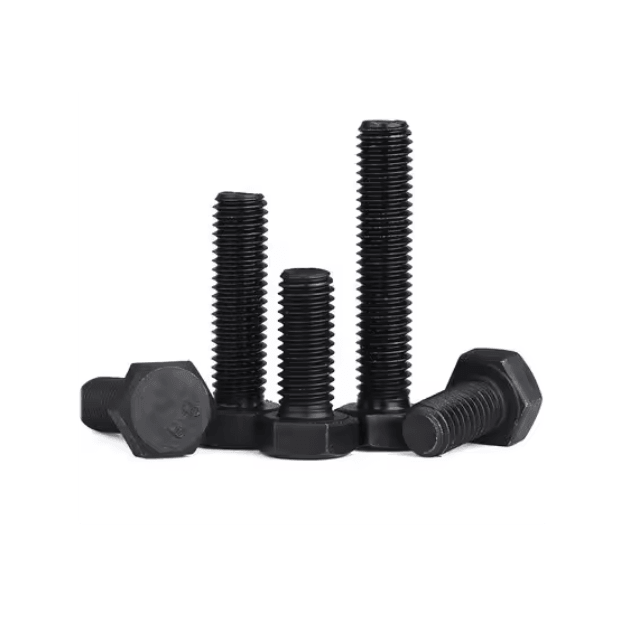
To confirm you actually have an m8 bolt in your hand, you need to measure it correctly. Many people make the mistake of measuring the head. Do not do that. The size of a bolt is defined by the major diameter of the threaded shank. Grab a set of digital calipers. Close the jaws around the threaded part of the screw. If the screen reads anywhere between 7.78mm and 7.98mm, you are holding an M8 fastener. It is that simple.
Next, you need to measure the length. This is another area where confusion happens. For a standard hex head bolt, you measure from under the head to the tip of the bolt. You do not include the head in the length dimension. However, if you are using a countersunk screw (the flat kind that sits flush with the surface), you measure the total length including the head. Getting this dimension right is vital to ensure the bolt goes deep enough into the tapped hole or passes through the material to engage the Nut.
You also need to check the thread length. Some bolts are fully threaded, while others have a smooth shank near the head. In heavy-duty applications, like the rock support systems we build, the unthreaded shank can act as a dowel, providing shear strength. For general use, a fully threaded bolt usually offers more adjustability. Always double-check your requirements.
What is the standard thread pitch for an M8 bolt?
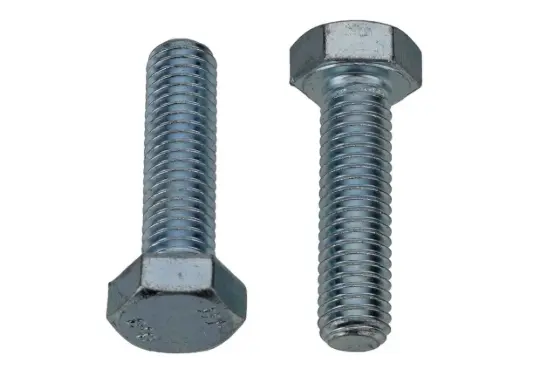
The thread pitch is the distance between the peak of one thread and the peak of the next. In the metric system, this is measured in millimeters. For an m8 bolt, the coarse standard—which is the most common one you will find at a Home Depot or hardware store—is 1.25 mm. If you see a bolt labeled simply as “M8,” it is almost safe to assume it is an M8 x 1.25.
However, there is also a fine thread. The fine pitch for an M8 is usually 1.0 mm. Why does this matter? Because a coarse thread bolt will not screw into a fine thread nut. If you try to force it, you will cross-thread the fasteners, ruining both the bolt and the hole. This is a painful lesson to learn, especially when working on expensive machinery or engine blocks.
To identify the pitch, you can use a pitch gauge. It looks like a little saw blade. You try to match the teeth of the gauge into the threads of the bolt. When it fits perfectly with no light showing through, you have found your pitch. If you don’t have a gauge, you can measure 10 threads. If 10 threads take up 12.5 mm of length, your pitch is 1.25 mm. If 10 threads take up 10 mm, your pitch is 1.0 mm.
M8 vs. Imperial: How do metric bolt sizes compare to inch sizes?
I often get asked if metric and imperial sizes are interchangeable. The short answer is: No. The long answer is: They can be close, but “close” usually results in stripped threads. The closest imperial equivalent to an M8 bolt is the 5/16-inch bolt.
Let’s look at the data. An M8 diameter is roughly 0.315 inches. A 5/16” bolt is 0.3125 inches. They are incredibly similar in thickness. You might be able to push a 5/16” bolt through an M8 clearance hole, but you cannot thread an M8 nut onto a 5/16” bolt. The thread pitch is completely different. The standard 5/16” thread is 18 threads per inch (UNC), while M8 is 1.25 mm per thread (which is roughly 20.3 threads per inch). They simply do not match.
Trying to mix these systems is a recipe for disaster. I have seen mechanics try to wrench a metric bolt into an imperial hole. It might turn once or twice, but then it binds. If you keep turning, you strip the metal. Always keep your metric and imperial threads separate. It is better to spend five minutes finding the correct bolt than five hours drilling out a broken one.
Why do thread pitch and major diameter matter for holding power?
The holding power of a bolt comes from the friction and mechanical engagement between the threads. The major diameter determines the shear strength—how much force handles cutting the bolt in half sideways. An M8 bolt, with its 8 mm thickness, offers significantly more shear resistance than an M6 (6mm), but less than an M10.
Thread pitch plays a huge role in vibration resistance. A coarse thread (M8 x 1.25) is deeper. It is stronger against stripping out of soft materials like aluminum or cast iron. This is why standard Bolt options for general construction are usually coarse. They assemble faster and handle dirt or damage better.
On the other hand, a fine thread (M8 x 1.0) has a larger minor diameter (the solid core of the bolt is thicker) and a smaller helix angle. This means it is less likely to vibrate loose. You often see fine threads in automotive suspensions or aerospace applications where vibration is a constant enemy. However, for most static structures, the standard coarse thread provides ample stability and durability.
Coarse vs. Fine: Which thread style should you use?
Choosing between coarse and fine depends on your application. If you are building a generic frame, assembling a machine guard, or doing home repairs, go with coarse (1.25mm pitch). It is the industry standard for a reason. These threads are robust. They are less likely to gall (seize up) during assembly, and they are easier to find.
Use fine thread (1.0mm pitch) when you need precise adjustment or higher strength in tension. Because the threads are shallower, the core of the bolt is thicker, making it slightly stronger in tension. Also, fine threads allow for finer adjustments. If you are setting the position of a sensor or a tensioner pulley, that extra precision helps.
However, fine threads are delicate. They are easily damaged by nicks or burrs. They are also more susceptible to cross-threading if you aren’t careful when starting the bolt. In the dusty, muddy environments of mining where my company operates, we almost exclusively prefer coarse threads for our Washer and plate assemblies because they are more forgiving in harsh conditions.
How to use a screw size chart to find the perfect fit?
A screw size chart is your best friend in the workshop. It is a simple table that lists the nominal diameter, thread pitch, tapping drill size, and head dimensions. To use it, start by identifying the diameter you need (e.g., M8). Look across the row. You will see columns for “Pitch” (usually 1.25), “Tapping Drill” (usually 6.8mm), and hex head size (usually 13mm).
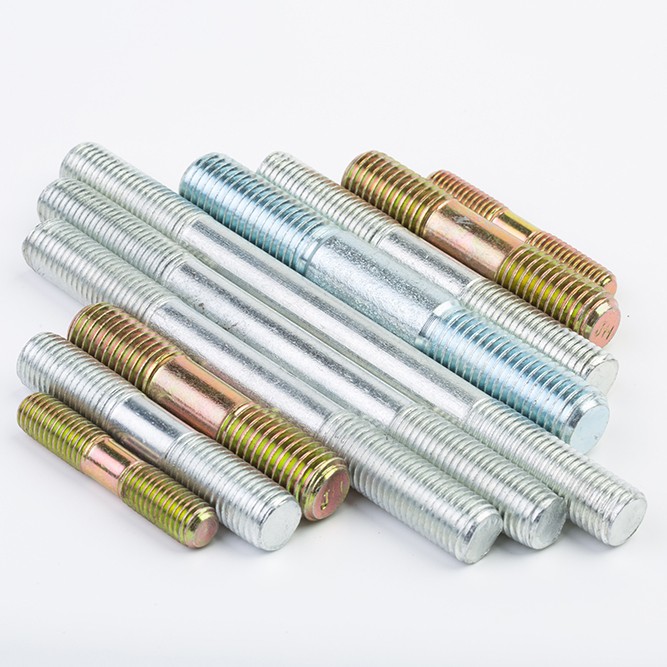
These charts also help you define tolerances. They will tell you the maximum and minimum allowed dimension for the bolt shank and the nut thread. This ensures that any ISO-standard bolt you buy will fit any ISO-standard nut. It eliminates the guesswork.
I recommend printing a metric screw size chart and sticking it to your workshop wall. When you are designing a part or repairing a machine, glancing at the chart saves time. It prevents you from drilling a hole that is too big (resulting in stripped threads) or too small (resulting in a broken tap). It is a simple tool that solves complex problems.
What size hole do I need for an M8 bolt?
There are two types of holes you might drill for an M8 bolt: a clearance hole or a tapped hole. A clearance hole is one the bolt passes through freely. For an M8 bolt, a close clearance hole is typically 8.4mm (standard series) or 9mm (loose series). If the hole is exactly 8 mm, you will struggle to push the bolt through if there is even the slightest misalignment.
For a tapped hole—where you intend to cut threads into the metal so the bolt screws directly in—you need a specific drill size. For a standard M8 x 1.25 thread, the correct drill bit is 6.8 mm. Here is the math: You take the diameter (8mm) and subtract the pitch (1.25mm). 8 – 1.25 = 6.75. We round up slightly to 6.8mm to allow for cutting clearance.
If you drill the hole too big (say, 7.5mm), the threads will be shallow and weak. The bolt might pull out under load. If you drill it too small (say, 6.0mm), you will likely snap your tap trying to cut the threads. Precision here is key. Always refer to your chart or do the math before you drill.
What are the common materials and strength grades for M8 bolts?
Not all M8 bolts are created equal. You might pick up two identical-looking bolts, but one could snap like a twig while the other holds a car engine. This comes down to steel grade. In the metric system, strength is indicated by numbers on the head, like 4.6, 8.8, 10.9, or 12.9.
- Grade 4.6: Low carbon steel. These are “commercial grade.” They are soft and used for light applications like holding wood together.
- Grade 8.8: Medium carbon steel, quenched and tempered. This is the standard for structural use. It has good tensile strength and is what you should use for most machinery.
- Grade 10.9 and 12.9: Alloy steel. These are high-strength, heavy-duty bolts used in critical applications.
In our factory, when we produce anchoring components like the Threaded steel anchor, we focus heavily on material properties. Using a low-grade bolt in a high-stress environment is dangerous. For general DIY, Grade 8.8 is your safest bet. It provides a reliable balance of cost and strength.
How do different head types affect the M8 bolt dimension?
Finally, let’s talk about heads. An M8 bolt can have various head styles, and this affects tool compatibility and clearance.
- Hex Head: The classic. For an M8, the spanner size is usually 13mm (ISO standard) or sometimes 14mm (DIN standard). It requires side access for a wrench.
- Socket Head Cap Screw (Allen): Has a cylindrical head with a hexagonal hole. You drive it with a 6mm Allen key. These are great when you have limited side clearance.
- Countersunk: Has a conical head designed to sit flush. This changes how you measure length (as mentioned earlier).
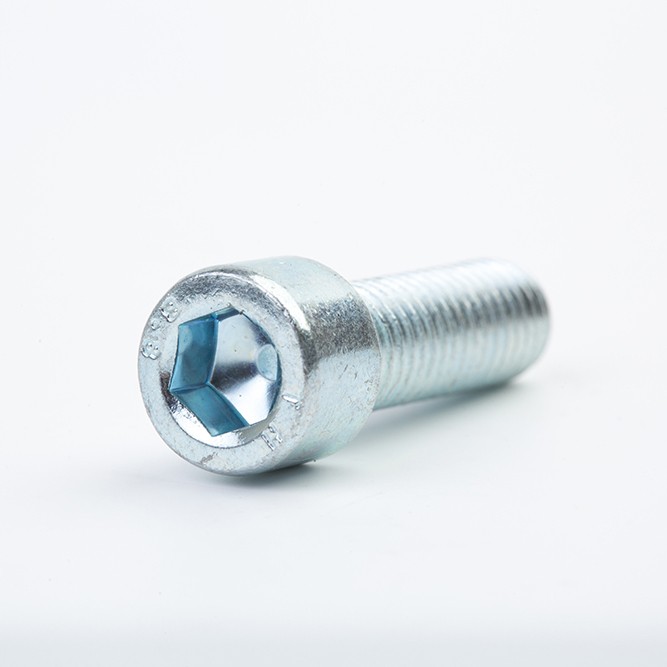
Knowing the head dimensions is vital for design. You need to ensure there is enough space for your socket or wrench to fit around the head. If you place an M8 hex bolt too close to a wall, you might be able to screw it in with your fingers, but you will never be able to tighten it with a tool. Always consider the “tool envelope” when planning where to put your fasteners.
Summary
To wrap things up, here are the key takeaways about M8 bolts:
- Identity: M8 means a metric bolt with a nominal major diameter of 8mm.
- Pitch: The standard coarse thread pitch is 1.25mm. Fine thread is usually 1.0mm. Always check before forcing a nut on.
- Measurement: Measure the diameter on the threads, not the head. Measure length from under the head (unless it’s countersunk).
- Drilling: For a tapped hole (M8x1.25), use a 6.8mm drill bit. For a clearance hole, use 9mm.
- Grades: Look for “8.8” on the head for standard structural strength. Avoid unmarked bolts for heavy loads.
- Tools: An ISO M8 hex bolt typically requires a 13mm spanner or socket.
Understanding these details ensures your projects—whether they are backyard builds or industrial installations—are safe, secure, and built to last.
Post time: Feb-05-2026