



In the world of construction and manufacturing, the humble screw is the hero that holds everything together. But not all screws are created equal. Two terms that often cause confusion, even for seasoned professionals, are “self-tapping” and “self-drilling.” As the owner of a factory that produces millions of fasteners and anchor systems, I, Allen, have spoken with hundreds of procurement officers like Mark from the USA. I know that understanding the distinct difference between these two types of screws isn’t just technical trivia—it’s crucial for job site efficiency, structural integrity, and your bottom line. Using the wrong screw can lead to wasted time, damaged materials, and weak connections. This guide will clear up the confusion once and for all, helping you make the right choice to fasten materials securely and efficiently every single time.
What is a Self-Tapping Screw and How Does It Work?
A self-tapping screw is a remarkable piece of engineering designed to form, or “tap,” its own threads in a material as it is driven in. Think of it as a screw that creates its own perfectly matched nut within the material it’s fastening. When you drive a self-tapping screw into a properly sized hole, its hardened threads cut and displace the surrounding material—be it metal, plastic, or wood—to form a secure mating thread. This action creates a tight, vibration-resistant connection without the need for a pre-tapped hole or a nut on the other side.
The key thing to remember about a standard self-tapping screw is that its primary job is to create threads, not to drill the initial hole. The tip of a typical self-tapping screw is pointed or blunt, but it lacks the cutting edges of a drill bit. Therefore, for this type of screw to work correctly in most materials, it almost always requires a pilot hole to be drilled first. The screw enters this pre-drilled hole and then gets to work tapping its own threads.
So, What Makes a Self-Drilling Screw Different?
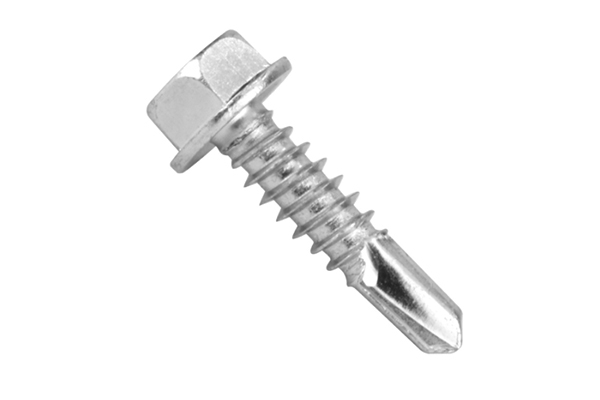
This is where the distinction becomes crystal clear. A self-drilling screw is a type of screw that does exactly what its name implies: it drills its own hole. The defining feature of a self-drilling screw is its tip, which is shaped like a drill bit. This specialized point, often called a flute or drill point, is designed to cut through material, effectively creating its own pilot hole. Once the point has penetrated the material, the threads of the screw engage and begin to tap the hole, just like a self-tapping screw.
Often referred to by the brand name “Tek Screws,” these fasteners are the ultimate all-in-one solution. A single self-drilling screw can drill a hole, tap a thread, and fasten materials in one quick, efficient motion. This eliminates the need for a separate drilling step, saving an incredible amount of time and labor on the job site. The ability of these screws drill their own pilot hole makes them a favorite for applications like metal building construction and HVAC installation.
Do All Self-Tapping Screws Need a Pilot Hole?
This is a fantastic question and a major source of confusion. For all practical purposes in professional construction and manufacturing, the answer is yes, a standard self-tapping screw will need a pilot hole. The term “self-tapping” refers only to the screw’s ability to create its own threads, not its ability to create its own hole. Attempting to drive a standard self-tapping screw into metal or hardwood without a pilot hole will, at best, fail to penetrate and, at worst, cause the screw to overheat and break.
The only exception where you might get away without a pilot hole is when working with very soft materials like thin-gauge plastic, some composites, or plasterboard. In these cases, a sharp-pointed self-tapping screw can sometimes displace the material enough to get started. However, this is not a reliable method. The best practice is always pre-drilling a pilot hole to the correct size. This ensures the screw drives straight, creates clean threads, and achieves maximum holding power without risking damage to the material or the fastener itself.
What are the Main Types of Self-Tapping Screws?
While the term self-tapping screw is often used as a catch-all, there are two primary categories based on how they form the thread. Understanding these types of self-tapping screws helps you select the perfect fastener for your specific material.
- Thread-Forming Self-Tapping Screws: These screws work by displacing material rather than cutting it away. As the screw is driven into the pilot hole, it pushes the material outward and compresses it to form the threads. This method creates a very tight, zero-clearance fit, which is excellent for resisting vibration. Thread forming screws are best used in softer, more malleable materials like thin metals, aluminum, and many types of plastic. Because they don’t create chips, they are ideal for clean-room environments or electronic assemblies.
- Thread-Cutting Self-Tapping Screws: These screws feature a sharp cutting edge or notch near the tip. This edge acts like a traditional tap, physically cutting away small amounts of material to create threads. This makes them suitable for harder materials where thread-forming would require too much force, such as thick steel, cast iron, or dense hardwoods. The cutting action produces a cleaner thread with less stress on the surrounding material, but it does create small chips that may need to be cleared away.
When Should You Use Self-Tapping Screws vs. Self-Drilling Screws?
Choosing between these two types of screws comes down to the application, the material, and your priority: precision or speed. A clear self-tapping vs self-drilling screw comparison makes the choice simple.
| Factor | Self-Tapping Screw | Self-Drilling Screw |
|---|---|---|
| Process | Two steps: 1. Drill a pilot hole. 2. Drive the screw. | One step: Drill, tap, and fasten simultaneously. |
| Best For | Thicker/harder materials, precision alignment, pre-existing holes. | Thin-gauge metals, speed-critical jobs like roofing and framing. |
| Speed | Slower, requires an extra step and tool change. | Extremely fast and efficient. |
| Materials | Wide variety: metal, plastic, wood, composites. | Primarily used to attach metal to metal or metal to wood. |
| Example Use | Fastening a heavy bracket to a thick steel plate. | Assembling steel stud framing or installing metal roofing. |
Essentially, if you need to fasten something quickly and efficiently, especially in general construction or HVAC work, the self-drilling screw is your go-to tool. If you are working with a very hard material that would wear out a drill tip, or if you need to align holes perfectly in an assembly process, the classic self-tapping screw in a pre-drilled hole is the more reliable choice.
Can a Self-Drilling Screw Also be a Self-Tapping Screw?
Yes, and this is the core of the entire confusion! Every self-drilling screw is, by function, also a self-tapping screw. However, not every self-tapping screw is a self-drilling screw. This is the most important concept to grasp.
Think of it like this: a self-drilling screw performs three jobs in order:
- Drills: Its specialized tip cuts a clean hole.
- Taps: The first few threads behind the tip then tap the hole, creating the internal threads.
- Fastens: The rest of the screw drives home to clamp the materials together.
A standard self-tapping screw only performs steps 2 and 3. You are responsible for performing step 1 by drilling a pilot hole. Because of this overlap, the industry uses the two terms to differentiate between screws that can drill their own pilot hole and those that cannot. For clarity in procurement and on the job site, it’s best to treat them as separate categories: “self-drilling” for the all-in-one screw, and “self-tapping” for the screw that requires a pilot hole. Understanding this helps avoid ordering the wrong type of fastener, like an Expansion Shell Anchor Bolt, which serves a completely different but equally critical function.
How Do You Choose the Right Screw for Materials like Wood, Metal, and Plasterboard?
Selecting the right screw for specific materials is critical for a strong, lasting connection. The material the screw is going into dictates the best type of point and thread.
- Metal: For thin sheet metal (e.g., steel studs, ductwork, metal roofing), a self-drilling screw is the undisputed champion of speed and efficiency. The length of the drill point determines the thickness of metal the screw can drill. For thicker, structural steel, you should drill a hole first and then use a fine-threaded, thread-cutting self-tapping screw.
- Wood: While a self-tapping screw can work in wood, specialized wood screws with coarser threads and sharp points are generally a better choice as they are less likely to split the wood. A self-drilling screw is often too aggressive for natural wood and can cause cracking, but it can work well in composite wood products or when attaching items to a wood frame through a metal bracket.
- Plastics and Plasterboard: For these softer materials, a thread-forming self-tapping screw is ideal. Its blunt tip and specialized threads will create a strong connection without cutting away and weakening the base material. A coarse-threaded plasterboard screw is a type of self-tapping screw designed specifically for this application.
What are Common Mistakes to Avoid When Using These Screws?
From my experience in manufacturing, I see the results when things go wrong on-site. Avoiding these simple mistakes will ensure your fasteners perform as designed. The most common error is over-tightening. This is especially easy to do with a powerful drill or impact driver. Over-tightening can strip the very threads the screw just created, leaving you with a spinning screw that has no holding power.
Another frequent mistake is using the wrong screw for the job, like trying to force a self-tapping screw into metal without a pilot hole. This will only burn out the screw and your drill. Similarly, using a self-drilling screw with a drill point that’s too short for the material thickness will prevent it from ever penetrating. Always drive the screw straight. Driving it at an angle puts immense stress on the head and can cause it to shear off, or it will create a weak, improperly formed thread.
Why is the Screw Head Type (e.g., Countersink) Important?
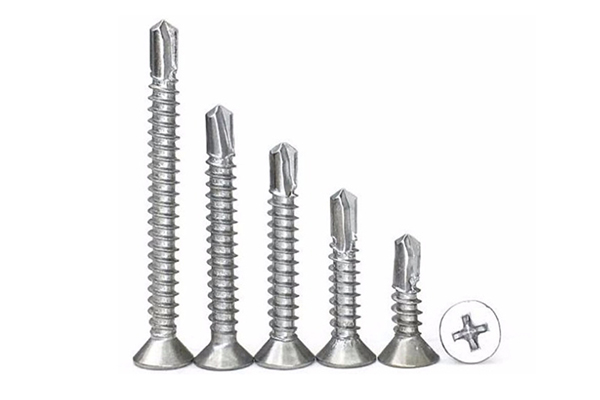
The business end of the screw gets all the attention, but the head is just as important for a successful application. The head types and drive types you choose affect both the final appearance and the installation process.
A countersink (or flat) head is designed to finish flush with the surrounding surface, which is essential for applications where you need a smooth finish, like installing drywall or decking. A pan head or hex washer head sits on top of the surface, providing a larger clamping area, which is great for sheet metal. The hex head allows for a socket driver to be used, which can apply much more torque without slipping. Different drive types, like Phillips, Square, or Torx (star), also play a role. Torx drives are superior for preventing “cam-out” (when the driver bit slips out of the screw head), making them an excellent choice for high-torque applications with power tools. Choosing the right head, like selecting the right Nut for a bolt, is crucial for a professional result.
Finding a Reliable Supplier for Your Self-Drilling and Self-Tapping Screws
For a procurement officer like Mark, the challenges don’t end with selecting the right screw. Finding a supplier who delivers consistent quality, communicates effectively, and manages logistics is paramount. A low price tag from an unreliable supplier can lead to project delays and material failures, wiping out any initial savings. When sourcing fasteners, especially from overseas, it’s vital to partner with a reputable factory.
Look for a supplier who is transparent about their quality control and can provide certifications like ISO 9001. This is your best defense against the certificate fraud that plagues our industry. Ask about their production capabilities and lead times to ensure they can meet your schedule. Clear and prompt communication is non-negotiable; you need a partner who can answer technical questions and provide shipping updates without you having to chase them down. As a direct manufacturer, we pride ourselves on building these trusted relationships. We don’t just sell a screw; we provide a reliable supply chain solution, from the production line to your job site. You can learn more about our philosophy as a Self drilling anchor tools factory on our main page.
Key Takeaways
Navigating the world of fasteners is simpler when you understand the fundamental differences. Here are the most important things to remember:
- Pilot Holes are Key: Standard self-tapping screws cut their own threads but require a pilot hole.
- All-in-One Solution: Self-drilling screws have a drill bit tip, allowing them to drill, tap, and fasten in a single step. They don’t require a pilot hole.
- All-in-One Relationship: Remember that all self-drilling screws are a type of self-tapping screw, but not the other way around.
- Match the Material: Choose your screw type based on the material. Use self-drilling screws for speed in thin metal and self-tapping screws for precision in harder or thicker materials.
- Quality First: Always prioritize quality over price. A high-quality fastener from a reliable supplier will save you time, money, and headaches in the long run.
Post time: Dec-16-2025